Blog
Revolution in Psychiatry: What Psilocybin Legalization Means in Practice
Imagine what it is like to struggle for years with depression that standard pharmacotherapy cannot cure – yet there is hope for a breakthrough within a single therapeutic day. What until recently sounded like utopia is becoming a reality thanks to the use of psilocybin in a controlled clinical environment. The Czech Republic has become one of the first countries in Europe to legalize the medical use of psilocybin in practice as of January 1, 2026. A substance once regarded as a dangerous drug now promises a revolution in the treatment of resistant conditions.
The legal framework for the legalization of psilocybin was only the first step on a long journey. Currently, experts in Czech psychiatry and psychotherapy face a logistical challenge: how to get the synthetic substance from the laboratory directly to the patient. The main obstacle is not the legislation itself, but the lack of a distribution system and unresolved reimbursement methods from health insurance companies, which are currently being intensively addressed.
In this article, we will look at what psilocybin actually is, how it affects our brain, and what its legalization means for patients in the Czech Republic.
How Psilocybin Works and The Scientific Evidence Behind It
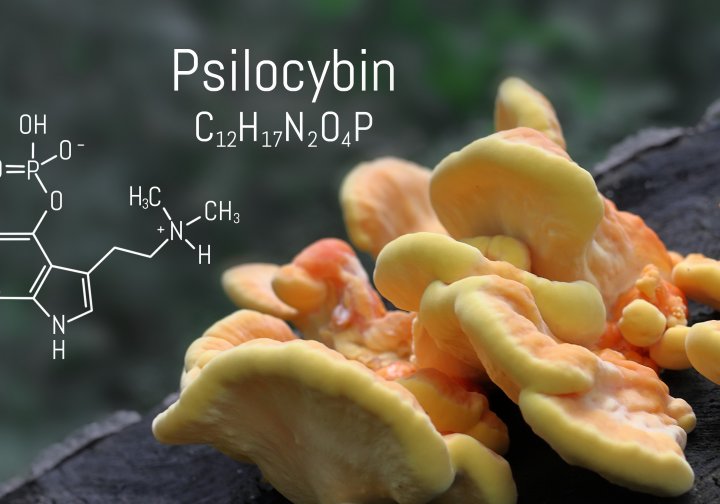
Psilocybin is a naturally occurring psychoactive substance found in hundreds of mushroom species, the most famous being those of the Psilocybe genus, colloquially known as "magic mushrooms" or "shrooms." It is known for its psychedelic effects, such as changes in consciousness, visual hallucinations, profound emotional experiences, and distorted perceptions of time and space. In the human brain, it acts on serotonin receptors, triggering processes that could be compared to a system restart. The key mechanism is the temporary suppression of the so-called "default mode network," which is associated with profound shifts in perception, thought, and consciousness during the psychedelic experience. This results in increased neuroplasticity, where the brain gains the flexibility to form new connections, helping to process trauma and change negative thought patterns.
The question remains, for which patients should psilocybin treatment be intended? In the Vinohradská 12 podcast, Professor Jiří Horáček, a Czech psychiatrist and director of the National Institute of Mental Health, identifies three main groups of patients for whom psychedelic-assisted therapy (PAT) can fundamentally change, or even save, their lives. The primary indication is treatment-resistant depression, a condition where a patient does not respond to at least two courses of standard antidepressants, which psilocybin has the power to break through. The second group consists of patients in so-called existential distress. This is usually caused by a serious physical illness, most commonly cancer, and it drastically reduces quality of life and negatively affects the prognosis of the treatment itself. The third group includes patients in immediately life-threatening psychiatric states where all other options have failed. This includes devastating stages of addiction or advanced stages of eating disorders, where psilocybin treatment could truly be life-saving.
There is robust data from numerous studies indicating that psychedelic-assisted therapy shows extraordinary potential in these critical indications, often exceeding the possibilities of conventional pharmacotherapy. The strongest evidence is found in the treatment of depression. For instance, a major American study demonstrated that in patients with Major Depressive Disorder, two doses of psilocybin led to an immediate and significant reduction in symptoms. Among 71% of participants, a substantial and measurable decrease in depressive symptoms was observed within just four weeks, with 54% achieving full remission (Davis et al., 2021). Exceptional efficacy can also be observed in the field of palliative care.
Therapy in Practice – Process, Availability, and Current Challenges
Psilocybin treatment takes place in three clearly defined phases under the supervision of a specialized team. The first step is an approximately two-week preparation phase, during which the client undergoes at least two sessions with a therapist. It is necessary not only to map the clinical issue that will be the subject of therapy, but more importantly, the client must learn how to work with their mind while under the influence of psilocybin. This is followed by the main therapeutic session, lasting approximately six to eight hours under the constant supervision of two certified professionals. During this time, the client, accompanied by a specially curated musical playlist, undergoes a deep internal experience, which is then processed in the following days during integration sessions. These sessions are crucial for processing the insights and applying them to daily life.
Naturally, the treatment involves specific risks, which experts aim to prevent through thorough preparation before the administration of psilocybin. If a client were not in the right mindset or did not feel they were in a safe environment, they could experience what the general public often calls a "bad trip," or, in technical terms, a challenging psychedelic experience. This can involve feelings of intense anxiety, panic, temporary paranoia, or a confrontation with repressed traumas. In an uncontrolled setting, these states can lead to dangerous behavior, however, within the framework of psychotherapy, these moments are viewed as part of the healing process. The presence of two therapists and a clinical environment ensure that even emotionally demanding passages of the session conclude safely. From a physical perspective, transient increases in blood pressure, heart rate, or nausea may occur, which is why patients must be thoroughly screened and monitored throughout the session.
Although 2026 is a landmark year, the actual availability of this care for Czech patients brings significant logistical challenges. Given that the therapy requires the full-day presence of a highly qualified team and specifically certified facilities, the costs per treatment cycle remain high, which may initially limit availability primarily to self-paying clients or specialized programs.
From a medical perspective, however, there is no longer any doubt about the success of this method. A clinically proven efficacy of around 70%, consistently confirmed by both Czech research conducted under the National Institute of Mental Health and prestigious international studies, positions psilocybin as one of the most effective tools in modern psychiatry. The legalization of psilocybin in the Czech Republic thus represents a definitive shift from an experimental, marginal method to a legitimate pillar of 21st-century medicine. This step offers hope to thousands of people stuck in an endless cycle of ineffective treatment and opens the door to a form of medicine that does not merely treat symptoms but aims for deep transformation and the restoration of mental health where traditional pharmacotherapy has previously reached its limits.
About the Author: Jana FelklováJana is a second-year master’s student in the Theoretical and Research Psychology program at Charles University in Prague. She viewed her work at Unicare Medical Center as a valuable opportunity to gain hands-on experience in the field of psychology while pursuing her studies. |
References:
Horáček, J., Páleníček, T., Tylš, F., & Viktorin, V. (2025). Klinický doporučený postup Psychiatrické společnosti České lékařské společnosti Jana Evangelisty Purkyně (ČLS JEP) a České neuropsychofarmakologické společnosti (ČNPS) pro asistovanou psychoterapii psilocybinem pro léčebné použití. Věstník Ministerstva zdravotnictví České republiky, 2025(21), 70–118.
Vinohradská 12, ČRo, Už je legální, v lékárnách ale není. Psychiatr Horáček se bojí, že pojišťovny psilocybin neproplatí, 2. 2. 2026 Autor: Matěj Skalický
Davis, A. K. et al. (2021). Effects of psilocybin-assisted therapy on major depressive disorder: a randomized clinical trial. JAMA psychiatry, 78(5), 481-489.